
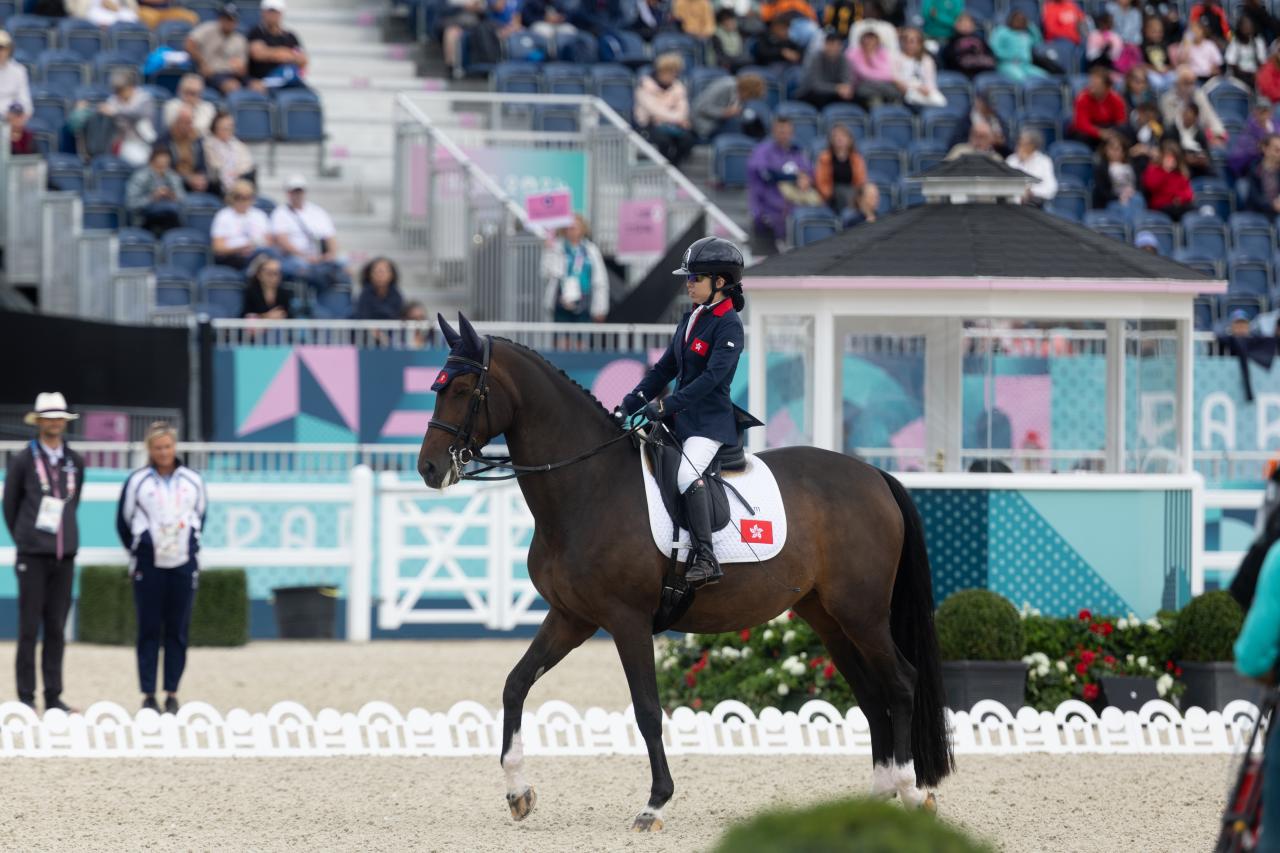
Para equestrian features the Para dressage discipline. Athletes can compete in dressage events, a championship test of set movements and a freestyle test where they can choose both the routine and their music. A team test event involves three to four members.
Athletes are permitted to use devices such as dressage crops, connecting rein bars, rubber bands and the use of voice to help reinforce communication with their horse.
Para equestrian dressage is conducted under the same basic rules as non-disabled dressage, but with riders divided into different competition grades based on their functional abilities.
The five grades, or classifications, indicate the different impacts of impairment on an athlete’s ability to ride. Competition within the same class includes all genders and it may include athletes with different types of impairments.
Each rider performs a test, and there are three tests in a competition. The team and individual tests see riders carry out a prescribed series of movements, while in the freestyle event riders can choreograph their own routines, incorporating a set number of ‘must have’ movements. Grade I riders perform their tests at walk pace. Grade II riders can walk and trot, while grades III and above can walk, trot and canter (although grade III can canter only in the freestyle).
The competition within each grade is judged on the accuracy, quality, and artistic expression of their riding, regardless of the athlete’s impairment.
The sport is governed by Fédération Equestre Internationale. The Equestrian Federation of Hong Kong, China is the member of Fédération Equestre Internationale in Hong Kong, China and the organization of elite development of Para Equestrian in Hong Kong, China.
Source of information credit: International Paralympic Committee